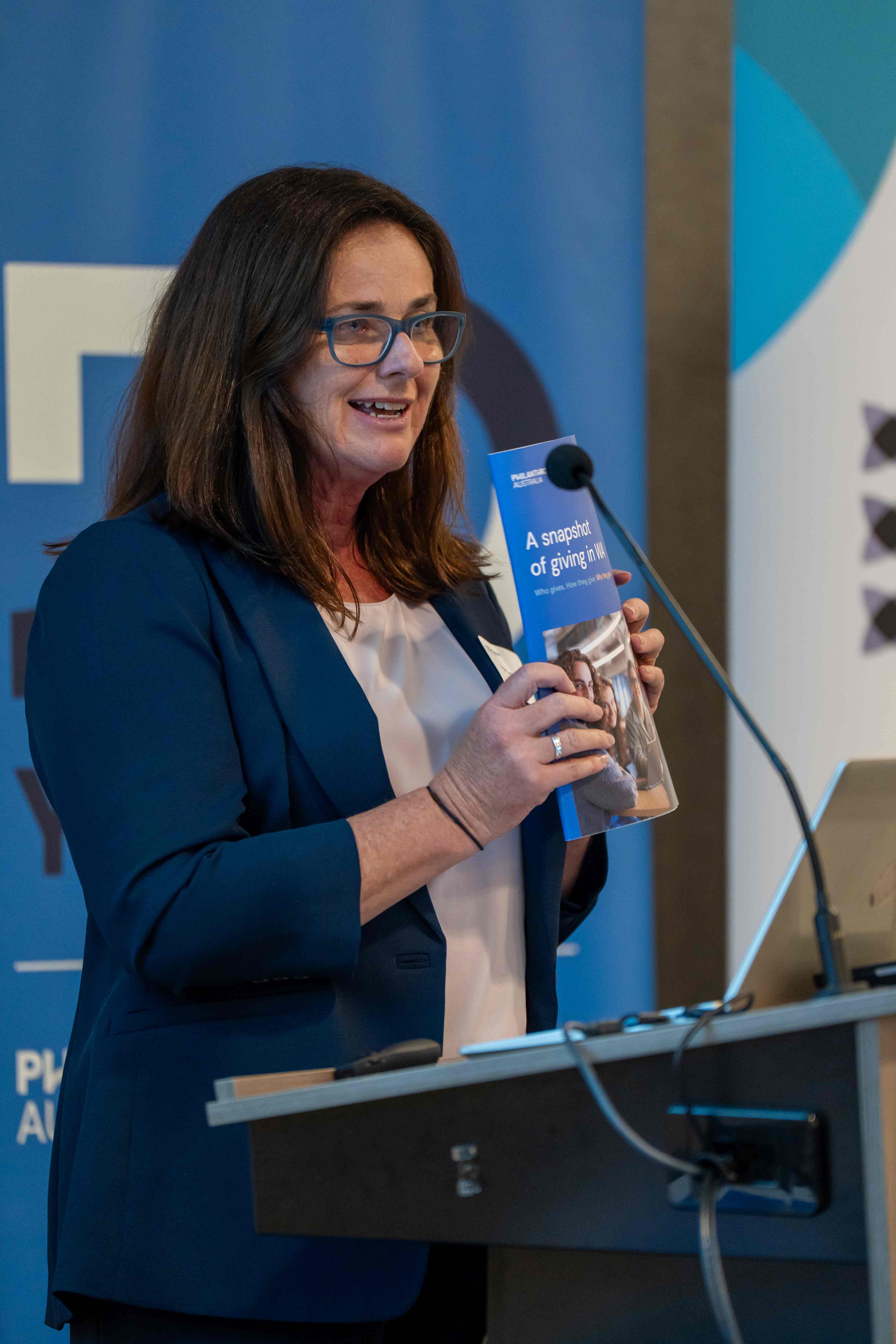
The Philanthropy Australia "Snapshot of Giving in WA" Report

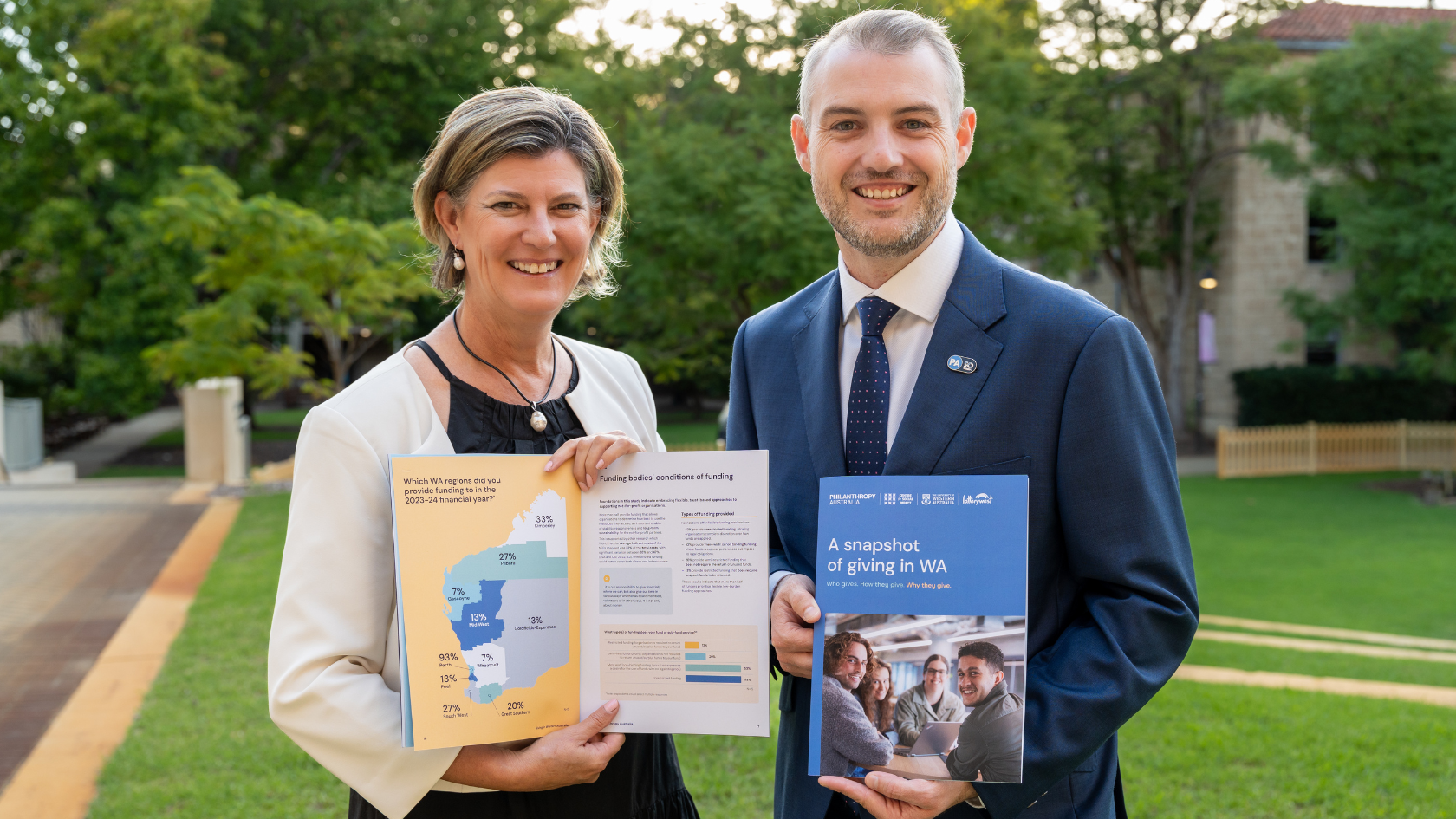
The first comprehensive benchmark of philanthropic giving in Western Australia
Undertaken by the Centre for Social Impact at The University of Western Australia (CSI UWA) in partnership with Philanthropy Australia , this project aims to understand the giving patterns, funding gaps, and donor demographics unique to WA.
The research, supported by Lotterywest, provided fresh insights into the motivations and behaviours of individual donors, philanthropic foundations and not-for-profit organisations.
The report identified opportunities to strengthen awareness of structured giving to better equip donors with the tools needed to support long-term, effective philanthropy.
Culture of giving in WA
Western Australia has a highly engaged group of individual givers, foundations and not-for-profits (NFPs).
They give because they want to invest in lasting change, community capacity, education and ways to contribute beyond financial giving. There is a culture of generosity, kindness, sharing, legacy, responsibility and putting others first.
Key findings
Giving by individuals
- Individuals give their money and their time (95% donate money and 82% volunteer)
- About half of individuals have little or no knowledge of structured giving vehicles
- Even through the current economic pressures have impacted their giving, almost 60% of individuals plan to give more in the next financial year
- More than half of individuals will likely respond to a ‘donation ask’ on social media when it is post from someone they know
Giving by foundations
- Program delivery support is the most common form of funding by foundations (94%)
- More than half of foundations also provide unrestricted funding
- Three quarters of foundations also provide funding capacity-building and technical assistance
- Sectors that receive the most support from foundations are health and education, followed by art, culture and humanities, then social or public welfare and the natural environment
Not-for-profit (NFP) funding
- Half of NFPs receive received 40% to 75% of their total funding as unrestricted funding
- Unrestricted funding is most commonly granted by philanthropic foundations or trusts, followed by fundraising events and programs and corporate grants or sponsorships
- Funding for programs largely doesn’t cover the full cost of delivery