

Supporting healing, empowerment & growth: An evaluation of the Recovery Options program


Uniting WA engaged the Centre for Social Impact UWA to conduct an independent evaluation of Recovery Options, a community-based mental health program that provides psychosocial support through two streams:
- 3-month rapid response support for those with unmet needs, a pilot developed in response to an extensive waitlist and evolving needs due to the cost-of-living crisis
- 6-18-month psychosocial support for those who require intensive, recovery-oriented support.
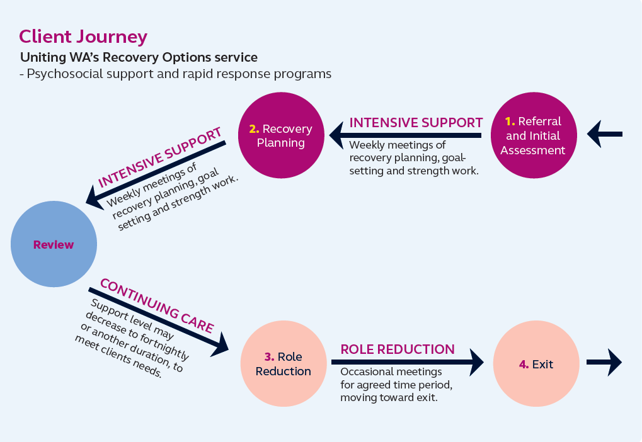
The research sought to understand whether RO is making a meaningful difference for participants, identify areas for improvement, and uncover the systemic factors impacting recovery. Using a mixed-methods approach with recovery-oriented principles, the evaluation aims to inform better practice and drive sector-wide learning.
Key findings
- Relational support is foundational: strong relationships built trust and enabled progress.
- Individual progress matters: success reflected personal goals, not clinical measures.
- Autonomy and choice are highly valued: person-led support is seen as empowering.
- Distress has social context: housing and cost-of-living pressure drives mental health needs.
- Discharge is complex: endings often felt abrupt and emotionally challenging.
- Strong sector relationships are critical: for seamless referrals and collaborative care.
Recommendations
- Increase flexible funding to sustain holistic, person-led support.
- Centre choice & control by keeping care responsive and empowering.
- Support exit transitions with co-designed plans and warm referrals.
- Embed peer and community connection early to reduce isolation.
- Resource goal-setting so mentors can support practical, personal goals.
- Strengthen collaboration with peer workers and community groups.
- Improve data and consent for better measurement and coordinated care.
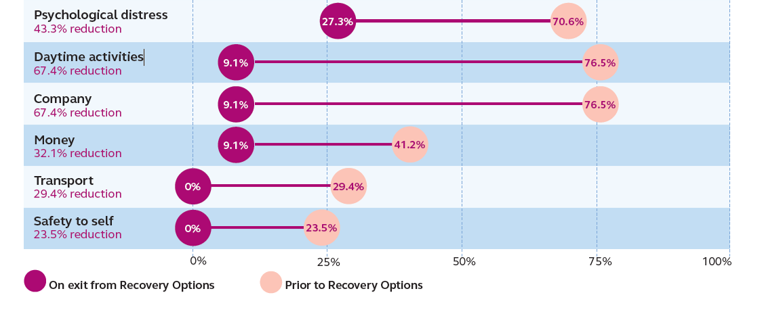
Fewer people were experiencing very high levels of distress, dropping from 58% at the start to 40% when they finished the program.
On exit, 2 out of 3 participants felt better able to:
- Manage their mental wellbeing
- Recognise early signs that may impact their wellbeing
- Have strategies or seek support when needed