Capturing the Economic Value of Psychosocial Support

Prepared by the Centre for Social Impact UWA in partnership with Community Mental Health Australia , the research report strengthens the evidence base for future investment in psychosocial support.
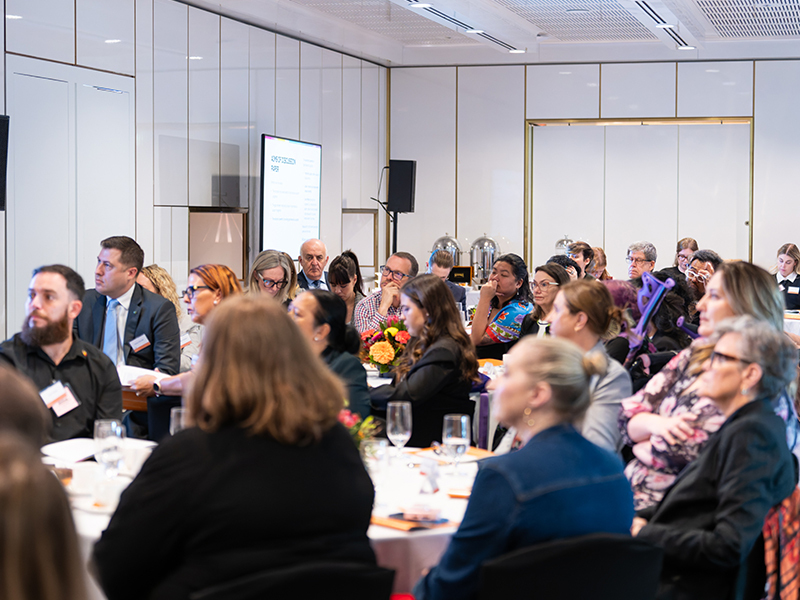
The new report was launched at a dedicated research webinar for researchers, policymakers and sector leaders where Professor Paul Flatau from the Centre for Social Impact UWA presented the economic case for investing in non-clinical, recovery-oriented mental health support.
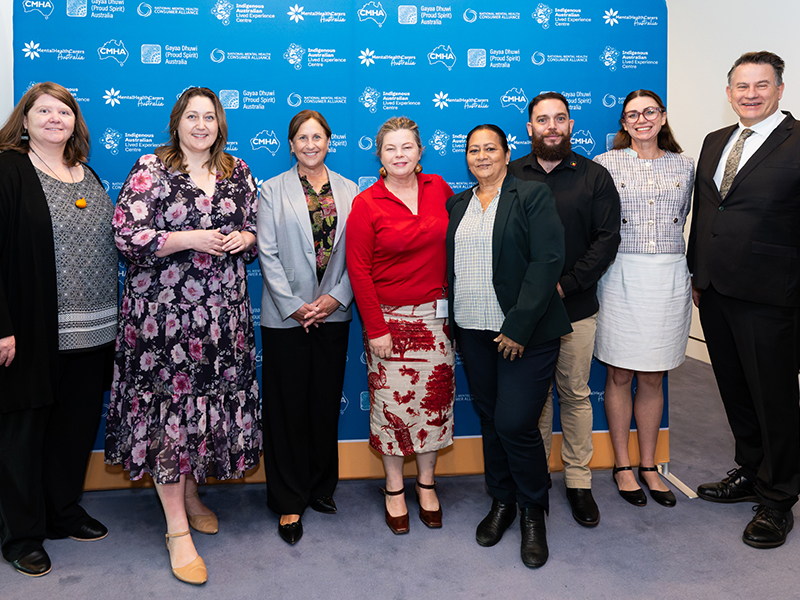
The launch followed the Lived Experience and Community-Managed Alliance Parliamentary Breakfast with Minister Emma McBride held in March 2026 , which brought together community leaders from across the country with a shared commitment to shaping a mental health system that recognises the full context of people’s lives, including their social and emotional wellbeing.
Co-hosted by the Indigenous Australian Lived Experience Centre, National Mental Health Consumer Alliance, Gayaa Dhuwi (Proud Spirit) Australia, Mental Health Carers Australia, and Community Mental Health Australia, the event was the culmination of the collaborative working partnership between the organisations. The breakfast was the first time the five national peak organisations came together to lead an event at Parliament House in Canberra.
Across their collective work, the peak bodies have consistently advanced the importance of a mental health system that is relational in design, culturally informed, community-based and grounded in lived experience.
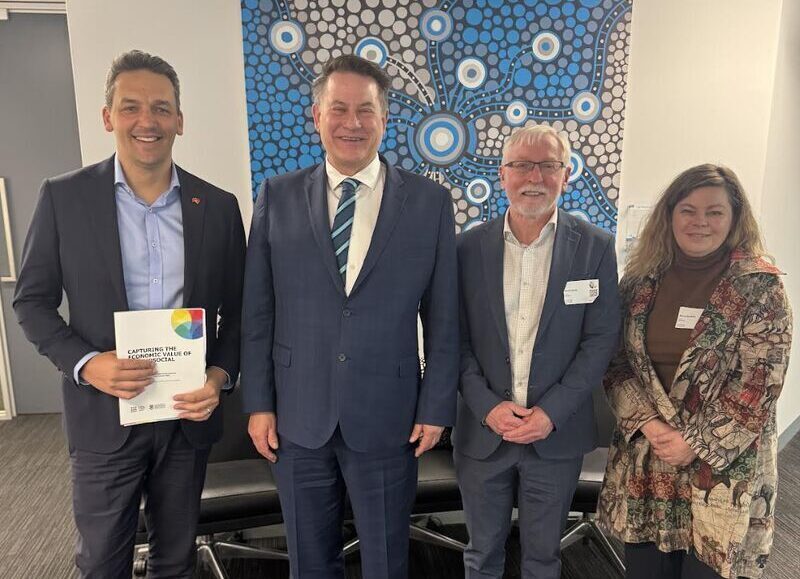
In August 2026, the Hon Blair Boyer MP, Minister for Health and Wellbeing hosted a roundtable meeting with stakeholders and Professor Paul Flatau who presented the report findings and implications. The presenters were also joined by Members of Parliament including the Erin Thompson Premier's Advocate for Suicide Prevention as well as staff from SA Health for an insightful discussion.
The findings are clear: community-based, non-clinical support helps people build stronger lives including housing, employment and their relationships - while easing pressure on hospitals and crisis services. With mental health challenges costing Australia $255–280 billion a year, investing in psychosocial support isn't just good care, it's smart economics.
- Mental Health Coalition of South Australia
A Report on the Economic Benefits of Psychosocial Support
This discussion paper examines the role of psychosocial support within Australia’s mental health system and reviews existing economic evidence on its impact. While available Australian evidence suggests psychosocial supports contribute to improved mental health, social outcomes, and broader economic benefits, the evidence base remains limited and underdeveloped, particularly in terms of robust economic evaluation.
The paper identifies a lack of agreed definitions, conceptual frameworks, and system‑level assets to support consistent implementation, measurement, and evaluation of psychosocial supports. It concludes that stronger investment is needed in defining, mapping, and evaluating psychosocial programs, including comprehensive economic evaluation, to better capture their mental health, social, and economic value.
Psychosocial support are non-clinical programs that facilitate recovery in the community for people experiencing mental illness. Psychosocial supports cover a broad range of domains: accessing and maintaining housing and employment, making friends, or sustaining positive relationships, hobbies, and interests.
Key findings
- Economic evaluations of psychosocial support programs that do exist show strong results in terms of value and cost offsets.
- There is a very limited number of economic evaluation studies of psychosocial support.
- Systemic factors seem to be limiting effective economic evaluation.