

Roadmap to Social Impact Measurement


Your Step-by-Step Guide to Measuring Social Impact
How do you measure the real difference your work is making for people and communities - particularly when social issues are interconnected, persistent and solutions are constantly evolving?
For many organisations, social impact measurement can feel challenging. While it’s often easy to track activities or outputs, understanding whether meaningful change is happening over time is far more difficult.
The Roadmap to Social Impact is a practical guide to social impact measurement, designed to help you better plan, measure and communicate the change you’re helping create.
We hope it provides both guidance and inspiration as we work together for a better world.
What Is the Roadmap to Social Impact?
The Centre for Social Impact is proud to release the second edition of The Roadmap to Social Impact: Your Step-by-Step Guide to Planning, Measuring and Communicating Social Impact.
In this comprehensive guide you’ll find step-by-step tools and frameworks designed to help you:
- Better understand the social issues you are working to address
- Identify the communities, stakeholders and systems connected to your work
- Clarify the change and outcomes you are hoping to create
- Collect and use evidence in meaningful and practical ways
- Communicate impact more clearly to stakeholders, funders and communities
- Demonstrate your organisation’s potential social impact.
The Roadmap to Social Impact is a collaborative initiative of the Centre for Social Impact’s four partner universities - The University of Western Australia, Flinders University, Swinburne University of Technology and UNSW. Together we are united by a shared commitment to develop rigorous research and evidence-based tools that support systems-level change and lasting social impact for people and communities.

Resources to Help You Measure Social Impact
To support organisations at different stages of their social impact measurement journey, we’ve developed both a concise e-book for busy professionals and a comprehensive full guide with deeper practical tools, frameworks and step-by-step support.
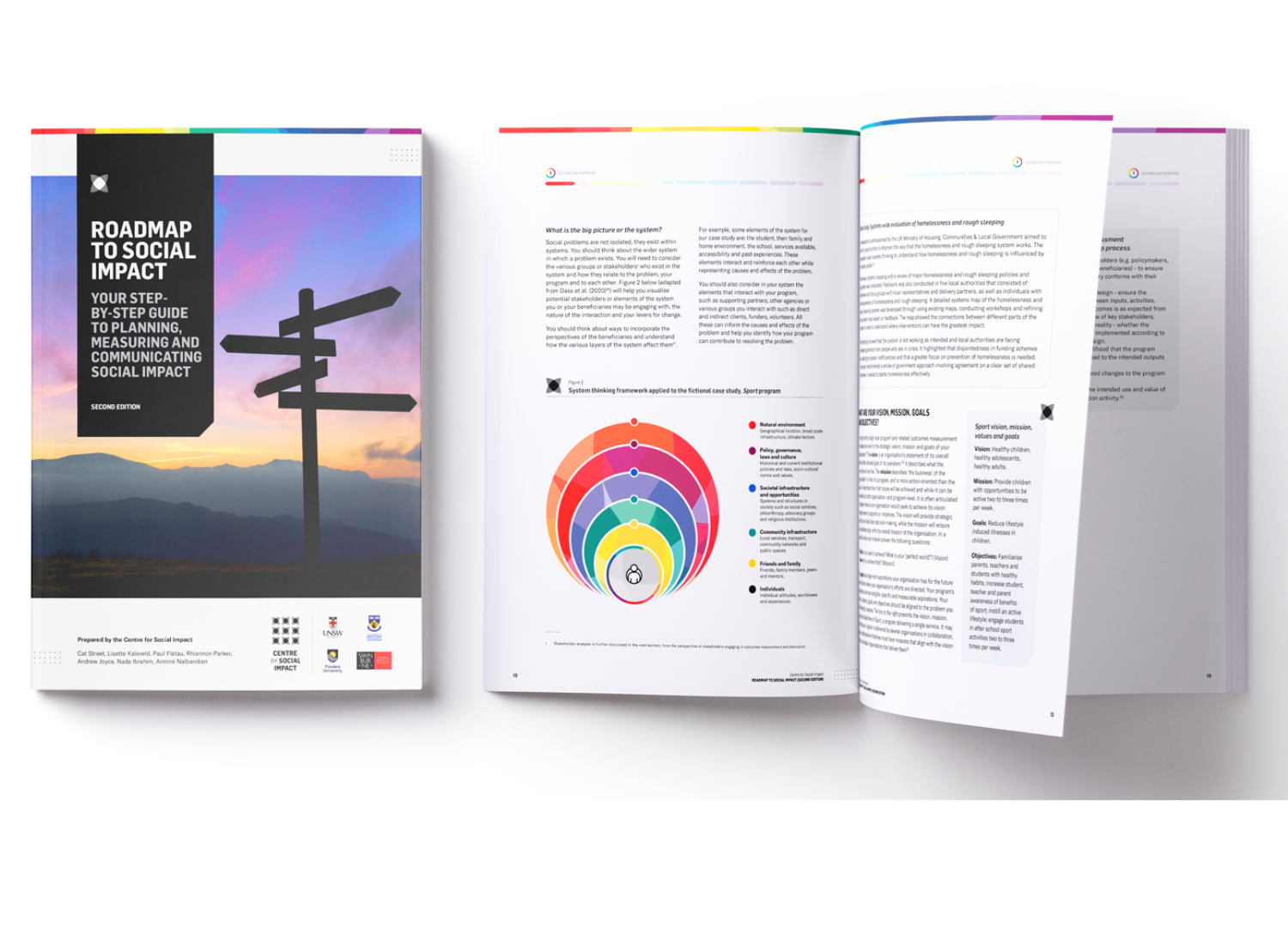
Comprehensive Full Guide
A detailed step-by-step resource featuring practical tools, evidence-informed frameworks and deeper guidance to support planning, measuring and communicating social impact.
Quick-Reference E-book
A shorter, practical introduction to social impact measurement designed for busy professionals wanting a clear overview of key concepts, frameworks and approaches.

Frequently Asked Questions
Hear from experts across the Centre for Social Impact as they answer common questions and share practical guidance on social impact measurement.
What is Social Impact Measurement?
Social impact measurement is the process of understanding and assessing the change created through a program, initiative or organisation.
Rather than focusing only on activities or outputs, social impact measurement focuses on outcomes — the broader changes experienced over time by individuals, organisations and communities. This can include changes in wellbeing, knowledge, confidence, behaviour, social connection or community outcomes.
Importantly, social impact measurement is not just about reporting results. It can help organisations learn, improve decision making and better understand what is creating meaningful change in response to complex social issues.
Note: To support clarity and accessibility, the Roadmap guide uses “social impact measurement” as an umbrella term. While the full guide draws on established approaches to outcomes measurement and evaluation, this broader language reflects common sector usage and is intended to make the content more accessible to a wider audience.
Why Social Impact Measurement Matters
Social impact measurement helps organisations better understand whether their work is creating enduring change for people and communities.
Beyond accountability and reporting, it can strengthen decision making, demonstrate value, improve programs and services, support funding and partnerships, motivate teams, and help organisations learn what is working and where they can improve.
In an increasingly complex environment, measuring social impact also helps organisations communicate their contribution more clearly and build a stronger evidence base for supporting change.
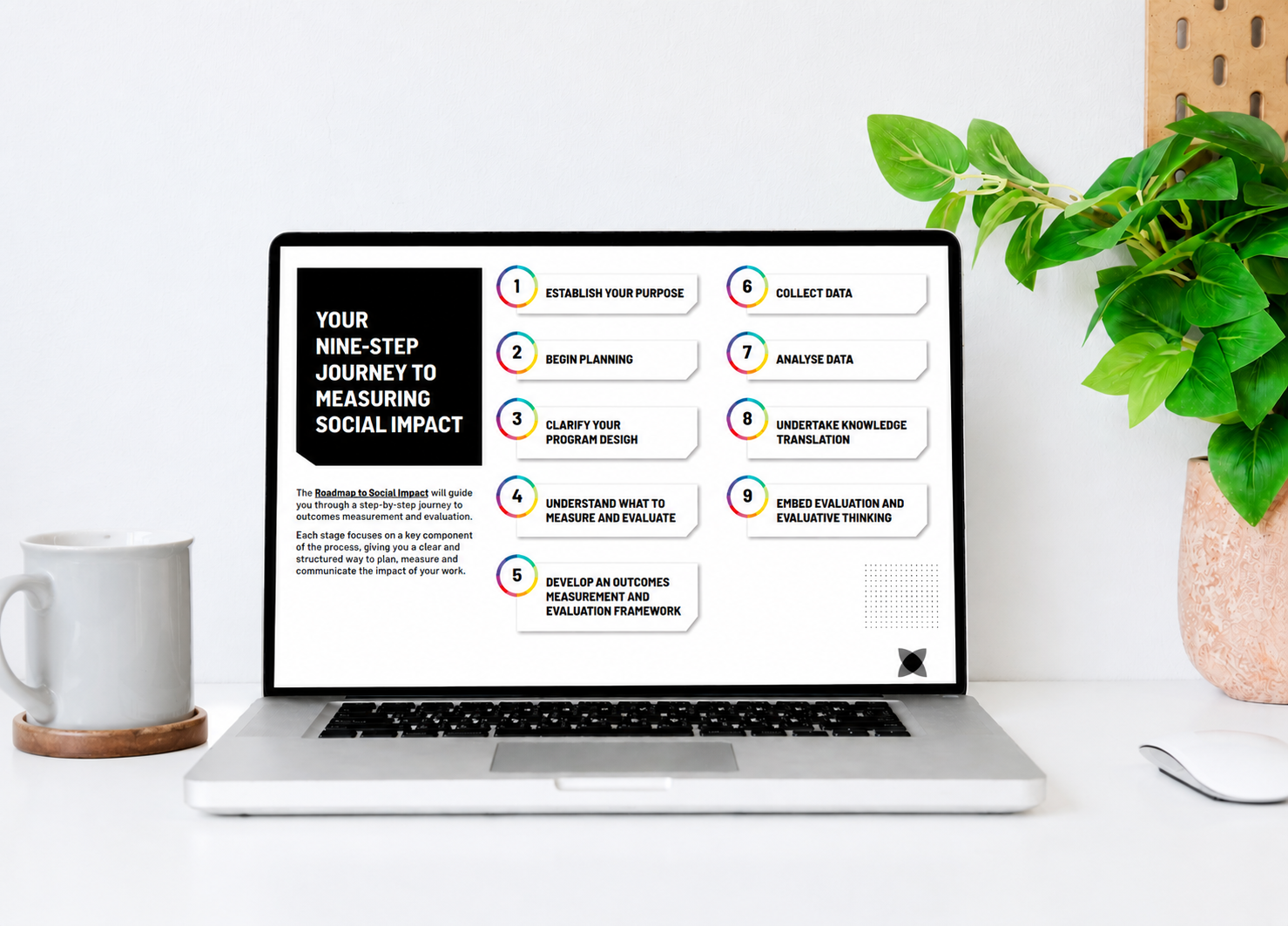
Step-by-Step Guide for Effective Social Impact Measurement
The Roadmap to Social Impact outlines nine steps to guide your measurement journey. Each step is designed to be practical and adaptable to your context.
Step 1: Find Your Purpose
Purpose provides the compass for every social impact measurement decision. Start by understanding the entrenched nature of the social issue you are addressing, identify the root causes, then map potential solutions. Take a systems thinking approach and try to understand how the components of the system interact. Clarify the outcomes you hope to achieve for individuals and communities (and possibly, how they link to your organisation’s vision and mission). Importantly, don’t rush this phase. A strong understanding of the problem and context ensures a solid foundation for meaningful social impact measurement over time.
Step 2: Planning
Effective planning turns aspiration into action. Success at this stage requires fostering a culture of learning and deeply understanding your stakeholders' interests and opportunities for their engagement in social impact measurement. Remember to place the lived experiences of program beneficiaries at the heart of your process.
Where possible, build a cross-functional team, invest in training, allocate resources and set realistic timelines. Identify potential risks, ethical considerations and capability gaps early, then secure leadership and stakeholder support to keep the work aligned, accountable and achievable.
Step 3: Clarify Your Program Design
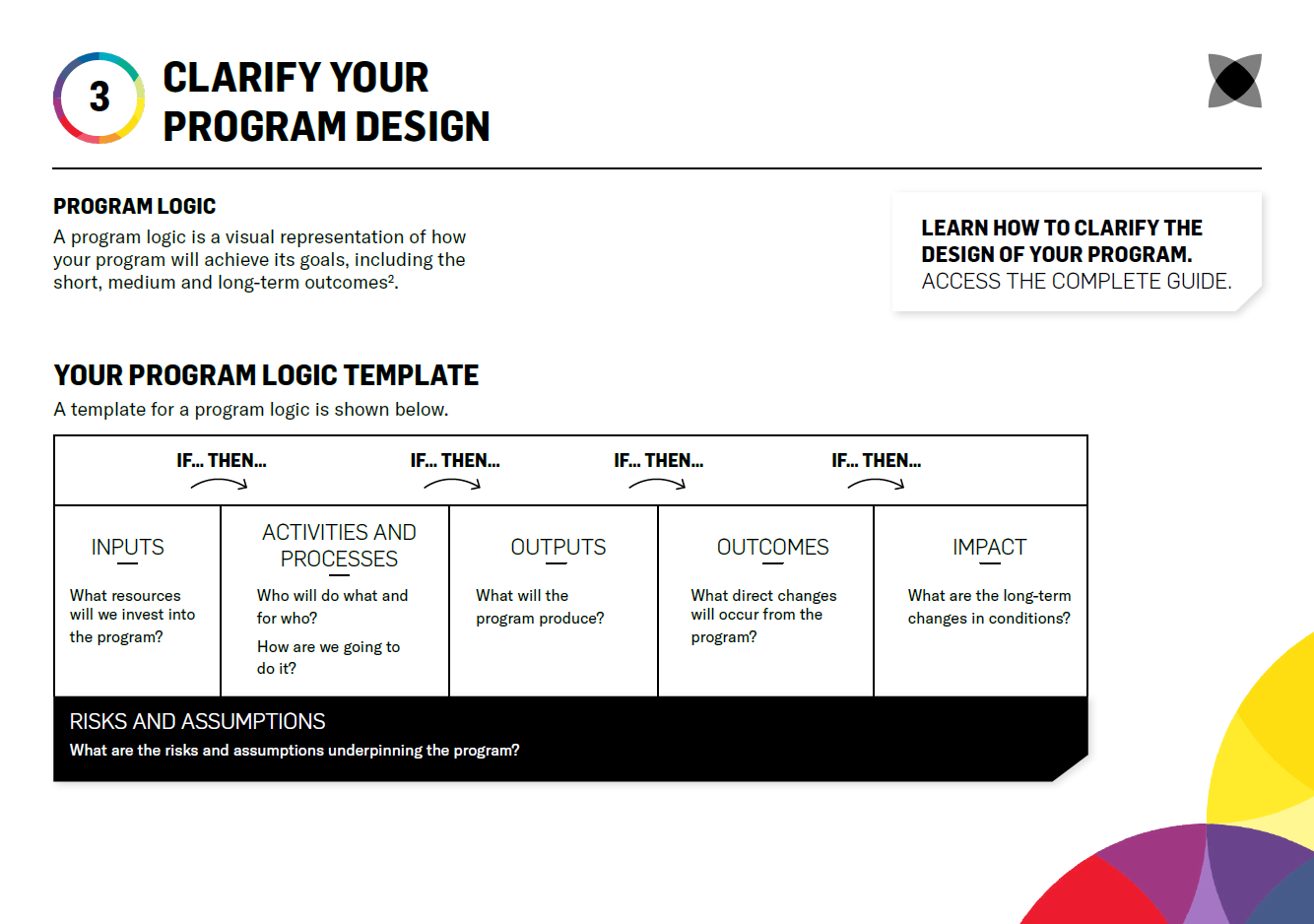
Before you can measure impact, you first need a clear understanding of the change you are trying to create and how your work contributes to that change. Tools such as theory of change and program logic help organisations map this pathway and build a stronger foundation for outcomes measurement.
Step 4: Understand What to Measure and Evaluate
Once you have a clear picture of what your program is trying to achieve, it is time to think about what you will measure and evaluate, and how. Meaningful measurement begins with questions. Consider these six evaluation criteria to guide your questions:
- Relevance: Is the program doing the right things?
- Coherence: How well does it fit with other social initiatives in the sector?
- Effectiveness: Is the program achieving its objectives?
- Efficiency: How well are resources being used?
- Impact: What difference is the program actually making?
- Sustainability: Will the benefits last over the long term?
Step 5: Develop an Outcomes Measurement and Evaluation Framework
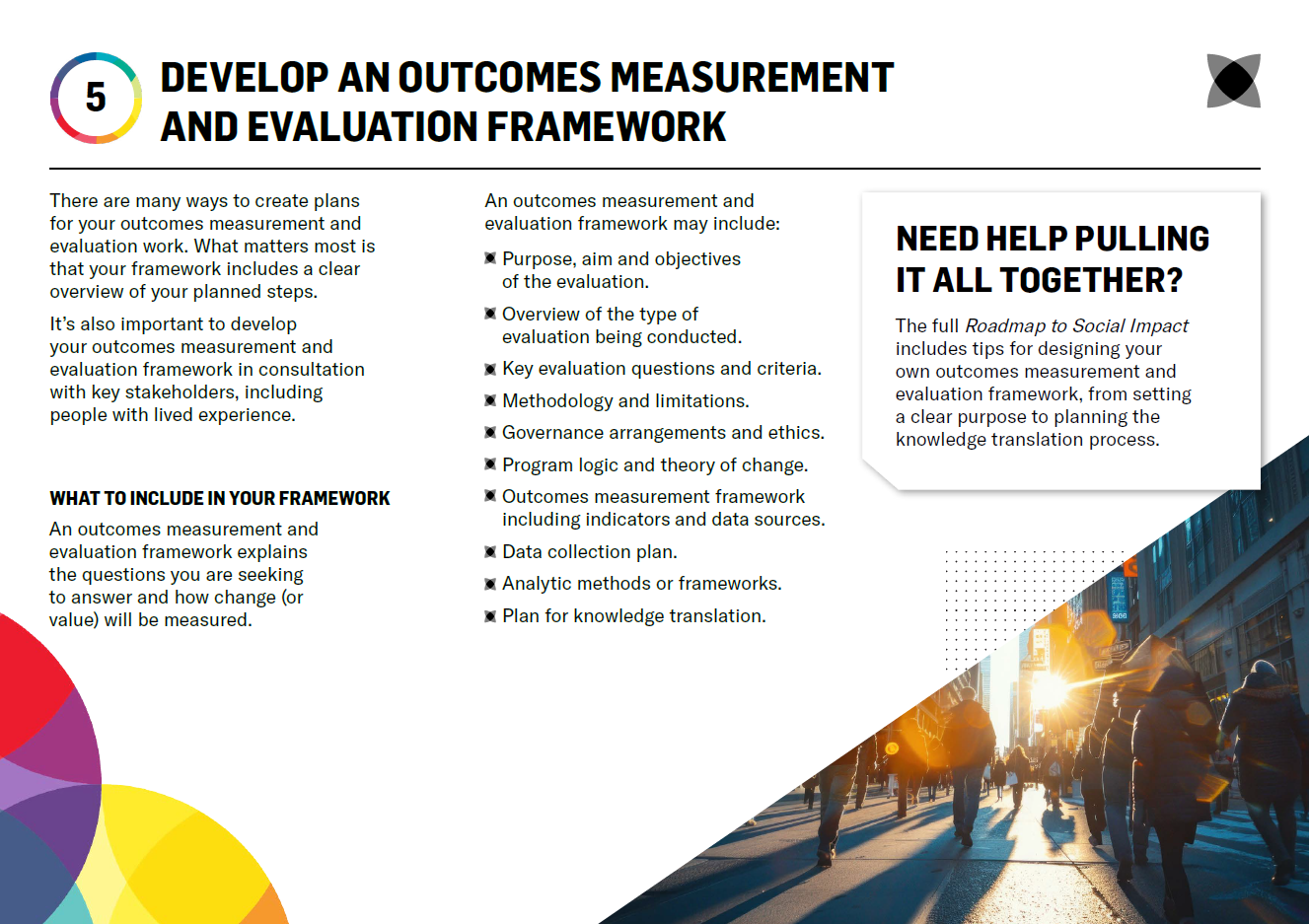
Your outcomes measurement and evaluation framework is an organising structure to ensure the evidence you collect can build (or test) your story of impact. Summarise purpose, evaluation approach and governance, then list indicators, data sources, collection methods and analysis plans. Embed equity, ethics and cultural safety considerations. Include roles, responsibilities and clear reporting schedules to help track progress. Include a plan for knowledge translation to ensure your findings can be shared and others can learn from your program and findings.
6. Collect Data
Choose the right impact measurement tool to quantify or qualify your indicators. Ideally, use mixed methods — combining quantitative data (e.g. statistics that show patterns and trends) with qualitative data (e.g. stories to provide the rich context) — to increase confidence in your findings.
7. Analyse Data
Apply analytic frameworks to uncover patterns. This may involve descriptive statistics for quantitative data or thematic analysis for qualitative data. Always assess the quality of evidence by checking for validity, reliability and triangulation.
8. Undertake Knowledge Translation
Knowledge translation is about getting to the "So What?". This involves taking a step back from the findings and reflecting on their significance in terms of the broader story of social impact, and implications for action. Share your findings with decision makers using tools like infographics, dashboards and case studies to inspire action. Follow the principle of reciprocity by sharing results back with the community.
9. Embed Evaluation and Evaluative Thinking
Evaluation of social impact requires you to build internal skills and capabilities. According to the Australian Evaluation Society, this involves seven competency domains, including evaluative attitude, research methods and project management.
Each step is explained in detail in the Roadmap to Social Impact guide, with templates and examples to help you apply the process.
Core Concepts in Social Impact Measurement
Social impact measurement involves a range of concepts, frameworks and approaches that help organisations better understand the change they are creating. Some of the key concepts explored throughout the guide include:
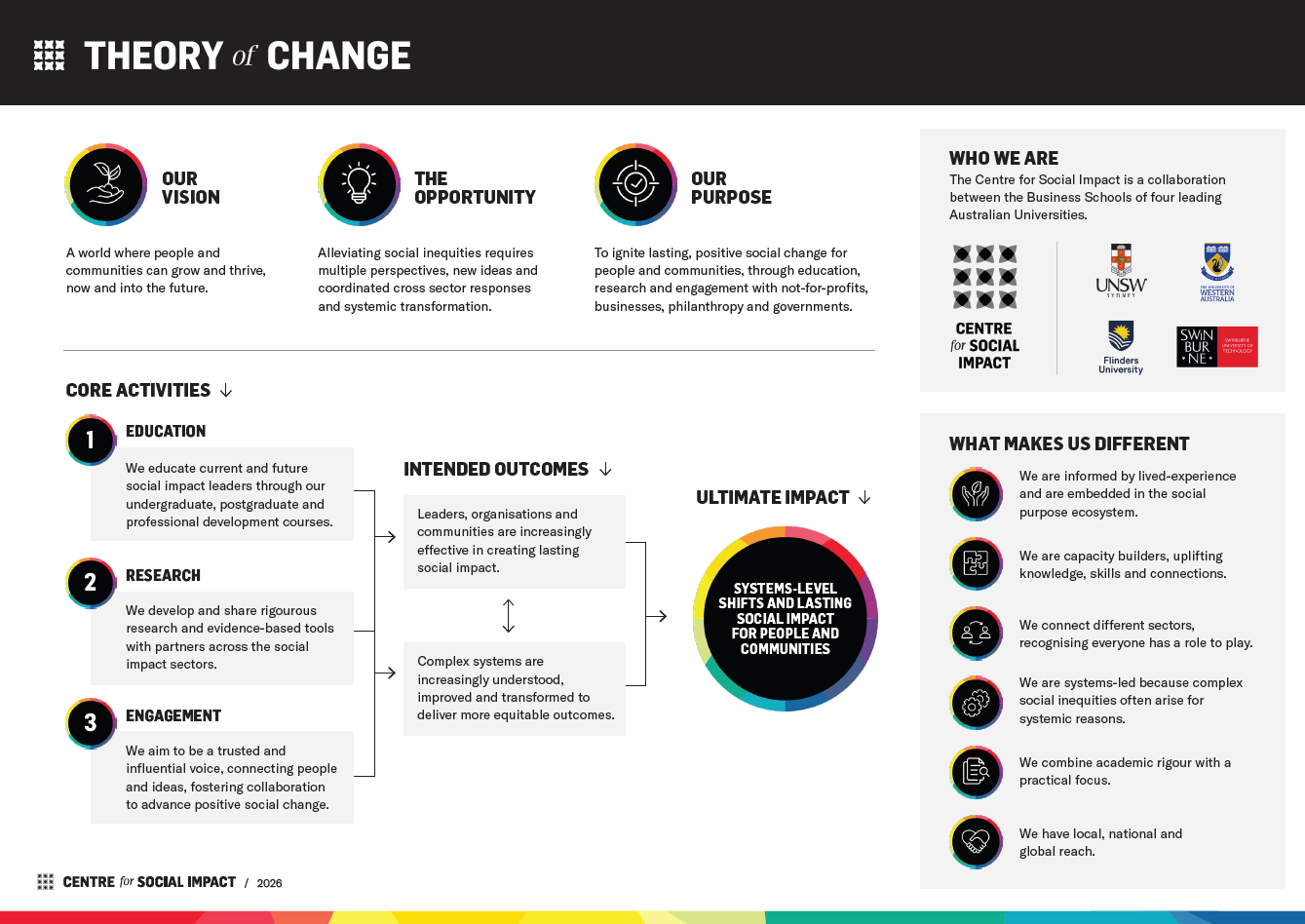
Theory of Change
A Theory of Change describes the pathway from your activities to the outcomes you seek. It makes your assumptions clear and creates a shared vision for your team and stakeholders.
Program Logic
A Program Logic, or Logic Model, visually links your inputs, activities, outputs and outcomes. It provides clarity and helps you communicate how your work leads to change.
Systems Thinking
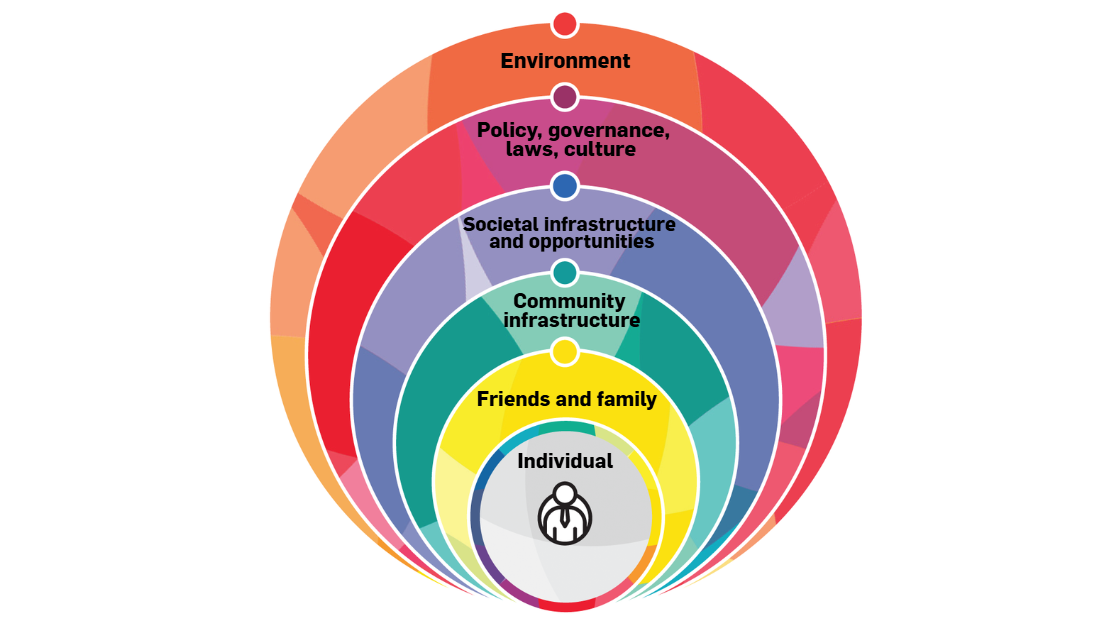
Systems thinking is the process of understanding a whole system by examining the links and interactions between the components. It supports learning about the complex causes of social problems, the effects of programs, their longer-term impacts within systems and how innovation and systems change can occur.
Outcomes Measurement and Evaluation Framework
A structured approach to set clear, measurable goals. Use evaluation tools — such as surveys, interviews, administrative data and participatory methods — to collect both quantitative and qualitative evidence. Combining data sources ensures you capture the full picture of your impact.
Measure What Matters with the Roadmap to Social Impact
Social impact measurement is a practical tool for driving meaningful change. The Roadmap to Social Impact is a guide to help you orient your work, refine your approach and achieve your goals. Use the nine-step process, adapt it to your context and keep learning as your organisation grows.
Download the free guide for a clear strategy to measure and communicate your impact.
Acknowledgements
The Roadmap to Social Impact is a collaborative initiative of the Centre for Social Impact’s four partner universities — Flinders University, Swinburne University of Technology, The University of Western Australia and UNSW.
Street, C., Kaleveld, L., Flatau, P., Parker, R., Joyce, A., Ibrahim, N., Nalbandian, A. (2025). Roadmap to Social Impact: Your step-by-step guide to planning, measuring and communicating social impact, second edition. Centre for Social Impact.
We gratefully acknowledge the support of the Professor Peter Shergold Social Impact Fund and extend our thanks to the AMP Foundation as its major contributor.