How Tishiko King is Rethinking Giving to Protect her Island Home

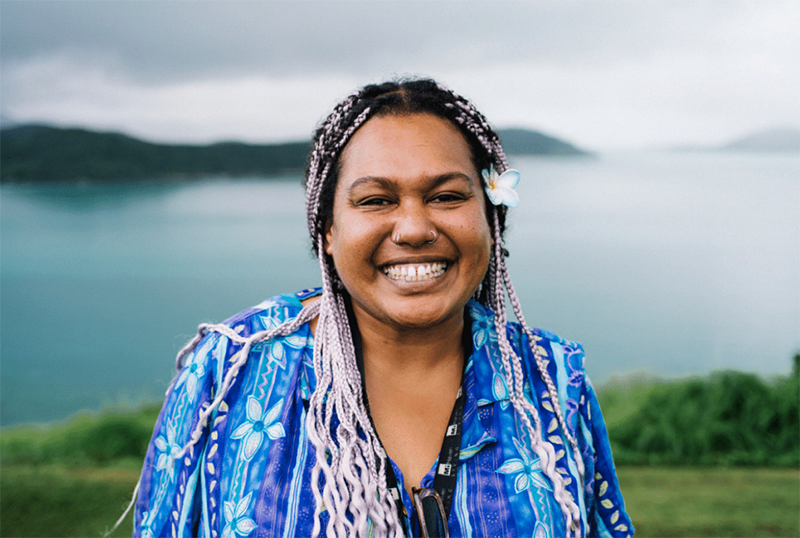
For Tishiko King, the impacts of climate change are not abstract. They threaten the islands, families and culture that shape who she is.
Tish is a proud Kulkalaig woman from the Kulkalgal Nation and the island of Masig in Zenadth Kes (the Torres Strait), and a marine biologist by trade. In 2020, returning home in the aftermath of the Black Summer bushfires and as the COVID-19 pandemic took hold, she was confronted by a deeply personal loss.
A significant part of her homeland had washed away as sea levels rose far beyond the global average, while island communities faced severe funding cuts to climate adaptation and infrastructure. Instead of being resourced to protect their country, they were told to relocate.
“I couldn’t quite comprehend why no one had done anything about it being washed away,” Tish explains. “As a Torres Strait Islander, you work within a minority within a minority. A narrow window of resources goes towards the environment, an even narrower window goes to marginalised groups, and an even tighter window goes to those island communities.”
It was this exact intersection of climate crisis and systemic inertia that eventually led her to the Centre for Social Impact’s philanthropy short course – a space where she could unpack the structural barriers she is determined to overcome.
Describing herself as “a daughter of the islands”, Tish feels a duty to advocate for families living on the frontlines of climate change, utilising access to resources not always available back home.
Turning lived experience into advocacy
Knowing the consequences facing her community, Tish stepped into grassroots organising, supporting local community consultation from the ground up. She went on to help lead the Our Islands Our Home campaign as an organiser, working to directly amplify the landmark Torres Strait 8 human rights complaint against the Australian government.
The complaint led to a historic victory in 2022, when the United Nations Human Rights Committee found that Australia had violated the human rights of Torres Strait Islander people by failing to adequately protect them from the impacts of climate change.
By helping elevate their voices to the world stage from the very beginning, Tish was part of a movement that set a global legal precedent for Indigenous climate loss and damage.
The campaign successfully activated $23 million for regional adaptation. However, according to Tish, as the funding was rolled out, decision-making and resources shifted away from the communities they were intended to support.
“I quickly saw how easily community-led wins could be pulled back into structures never designed to put local people in control,” she says.
She constantly questioned why people far removed from community were making decisions for those on the ground. Tish says she became accustomed to walking into rooms where very few people of colour were present, often carrying the heavy expectation of representing whole communities.
Redirecting capital closer to community
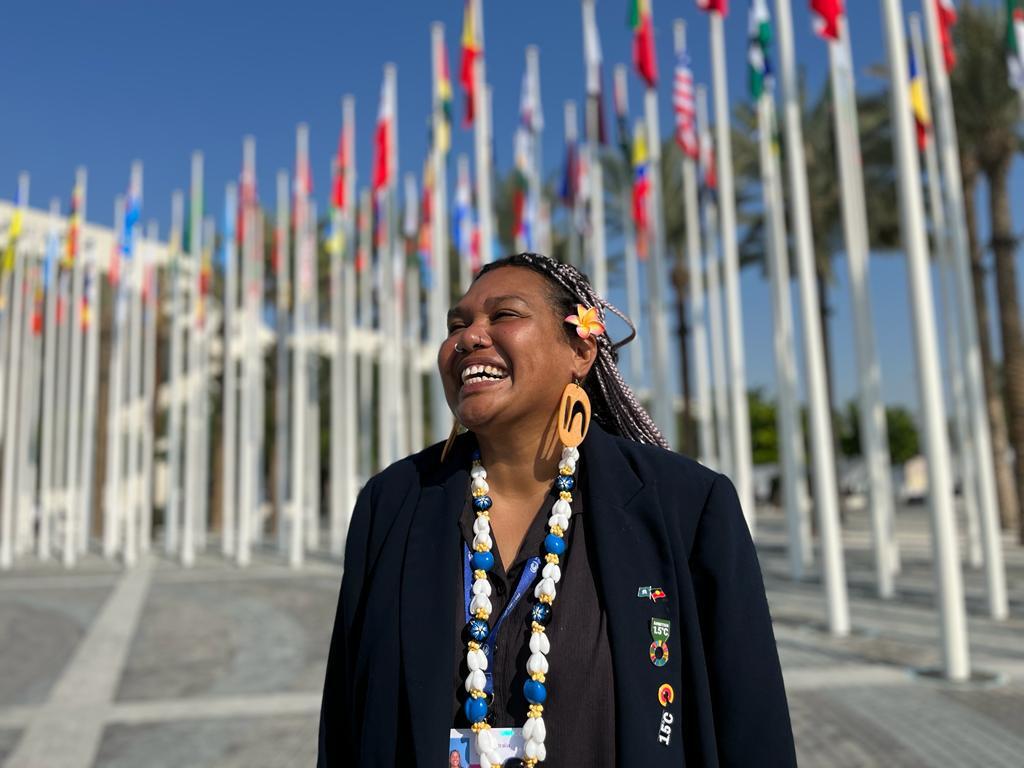
Seeking an alternative, Tish joined Groundswell to lead its Caring for Country grant program. Alongside First Nations peers, she helped design a pilot program that prioritised collective collaboration over competition for resources by creating a grant round that was “by mob, for mob” and accessible to mob only.
By pooling resources from progressive wealth holders, the program delivered $1.4 million directly to grassroots projects. It proved that philanthropy looks entirely different when decision-making is handed to the people defending their homelands, rooted in a cultural understanding that resources are meant to serve the collective.
In 2023 Tish’s journey then took her to the Australian Communities Foundation, where she became the organisation’s first First Nations employee. Stepping into a large philanthropic institution during a charged referendum year carried a heavy emotional toll, but it also gave her a closer view of how wealth is moved and protected.
“I was finding it hard to understand things because I had such a narrow lens of just that moment in time politically and socially,” she says.
Recognising the need for a self-determined space, Tish founded Just Futures Collab , the first Torres Strait Islander-led giving circle activating resources directly for First Nations climate solutions.
For Tish, grounding philanthropy in lived experience fundamentally shifts power and redefines what “impact” actually looks like. It allows communities to move away from rigid, corporate KPIs and instead measure success by how effectively power is handed back to local people to shape their own futures.
Learning the language of systems change
Rather than walking away from philanthropy, Tish decided to better understand it. She began looking for opportunities to learn how institutional giving works and how funding decisions are made.
Her search led her to The Giving Academy, where she completed the Giving in Complexity short course with the support of a scholarship from the Centre for Social Impact.
The course offered a practical way to build stronger partnerships between grassroots leaders and wealth holders. It provided a clearer lens on how major foundations operate, allowing her to speak into those spaces with greater strategy and confidence.
“What was really helpful was understanding the language and frameworks that folks in that audience need, so I can meet them where they’re at,” she says.
Deepening practice through The Giving Academy
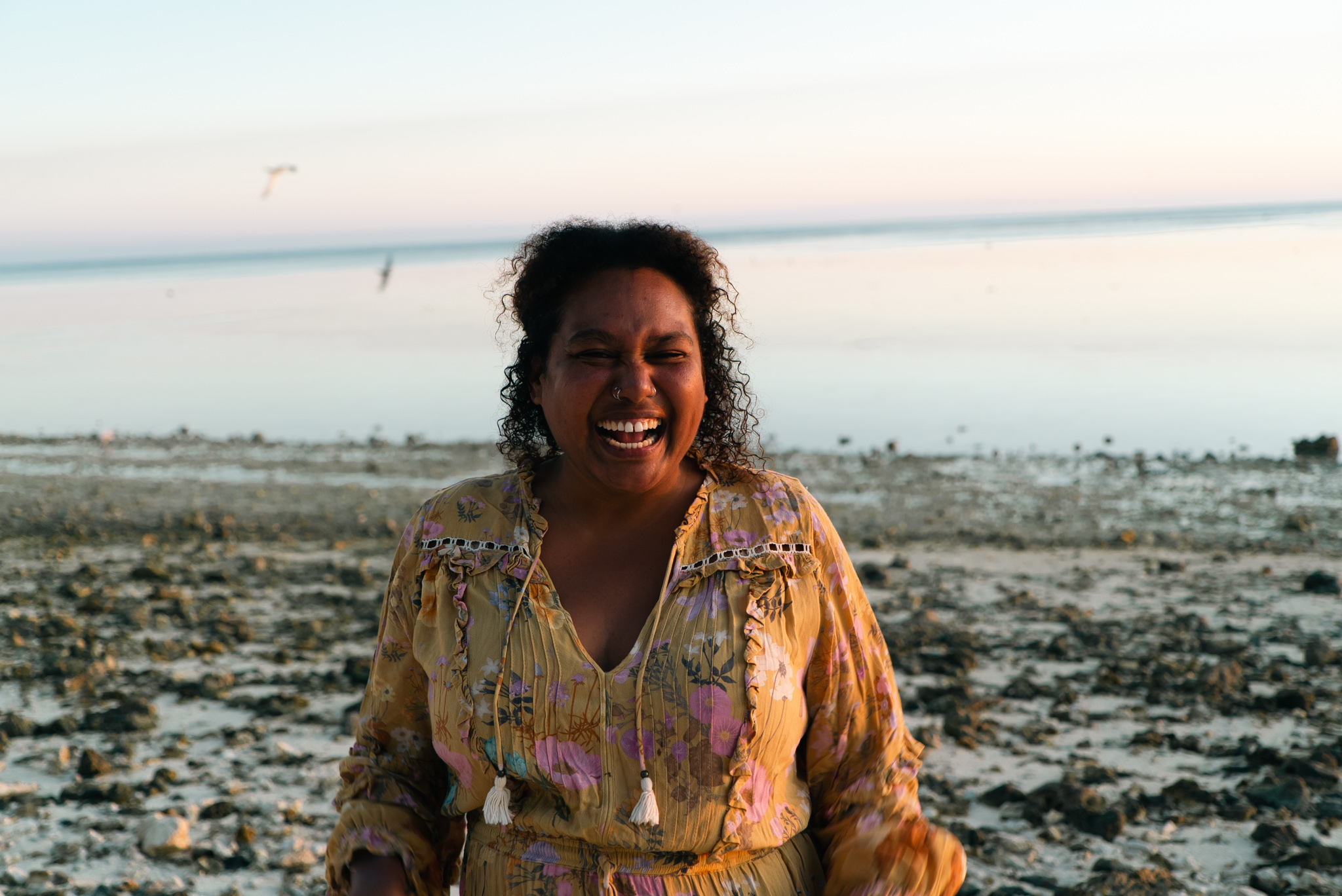
What Tish enjoyed most about the course at The Giving Academy was the openness of the space, where people across corporate, financial, and philanthropic sectors could sit with complexity together.
“When I walked into the room, I instantly felt that we were in a safe ‘no-shame’ space. We were all open to understanding that there are massive social issues ahead of us, and that it’s not one person that can solve it,” she says.
Tish sees the course as rare common ground where people can understand each other without asking communities to carry the burden of translation alone. It’s a neutral space where no one holds the outcome; you’re joining it together.
Opening the door for future First Nations leaders
Tish walked away with practical tools to expand her work with Just Futures Collab, proving how powerful it is when a deeper systems skillset works hand-in-hand with lived experience. She is determined to see more First Nations leaders access this course because it changes the power dynamic in the room.
“I think a lot of First Nations people would get a different lens from their perspective,” she says.
According to Tish, instead of grassroots communities carrying the exhausting burden of constantly translating their realities to funders, this training allows First Nations leaders to read the landscape of wealth. It gives them the strategic language to meet institutional boards where they are at, accurately map a funder's readiness, and protect themselves from burnout. As Tish notes, it allows leaders to recognise immediately if a funder is genuinely ready to back systemic solutions.
For those ready to move beyond linear problem-solving and better navigate dynamic, interconnected systems, Giving in Complexity offers a practical, reflective space to deepen philanthropic practice and help resources move with purpose, trust, and accountability.