

The Social Economy: A framework for change or just another label?


Year Two of the Australian Social Economy Survey is now open, inviting sector leaders to help drive the next stage of this landmark research.
In the face of urgent large-scale challenges like entrenched disadvantage, housing stress and climate mitigation and adaptation, momentum is growing for innovative responses driven by social and environmental purpose. This context is paving the way for a new relationship between society and economy – what is being termed globally as ‘the social economy’.
But what is the social economy, how significant is it and under what conditions could it represent a real framework for positive change?
On 13 August 2025, the Centre for Social Impact (CSI) hosted a panel discussion on these key questions as it launched a research report from the first year of a longitudinal study into the state of the social economy in Australia.
Featuring insights from leading voices across government, advocacy, social enterprise and business, the conversation was facilitated by CSI CEO, Arminé Nalbandian and examined the potential of the social economy as a blueprint for a fairer, more sustainable Australia.
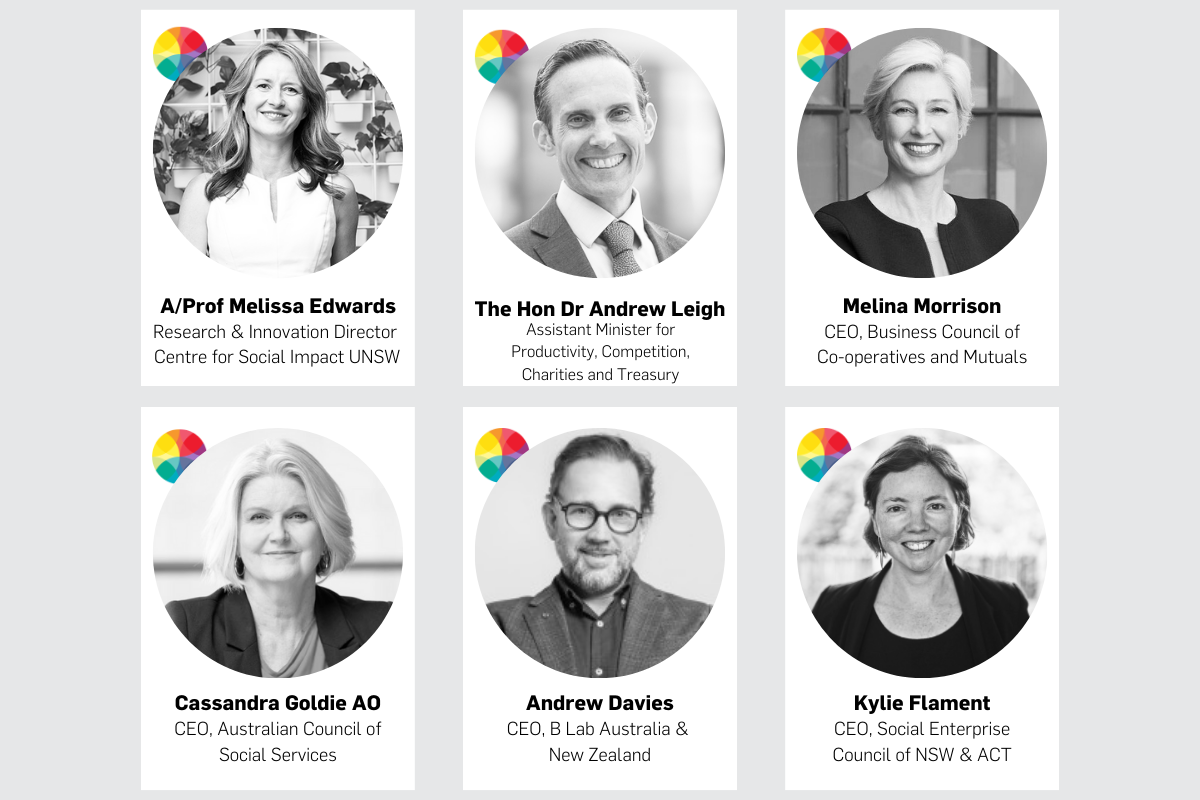
Meet the Panel
Research that breaks new ground
In the current context of the pressing social and environmental challenges facing Australian society, Associate Professor Melissa Edwards asks are we investing sufficiently in the organisations which are best placed to face these challenges?
“This is where the social economy comes in and shines,” she said, outlining the social economy as made up of charities, not-for-profits, social enterprises, cooperatives and mutuals, B Corps and philanthropic organisations all driven by a social or environmental mission and existing to serve communities rather than shareholders.
For almost two decades the Centre for Social Impact has worked alongside charities, social enterprise, government, business and philanthropy to strengthen the foundations for social change in Australia. Now it has launched its inaugural report on Australia’s social economy, a longitudinal study that will continue over the next two years, providing the first comprehensive mapping of Australia’s social economy, its impact and significance.
The first year of this research analysed a cross section of these social economy organisations to understand their processes and needs. While the study faced challenges in variable data sources and differing governance structures, it highlighted five key findings that were consistent across organisations making up the social economy.
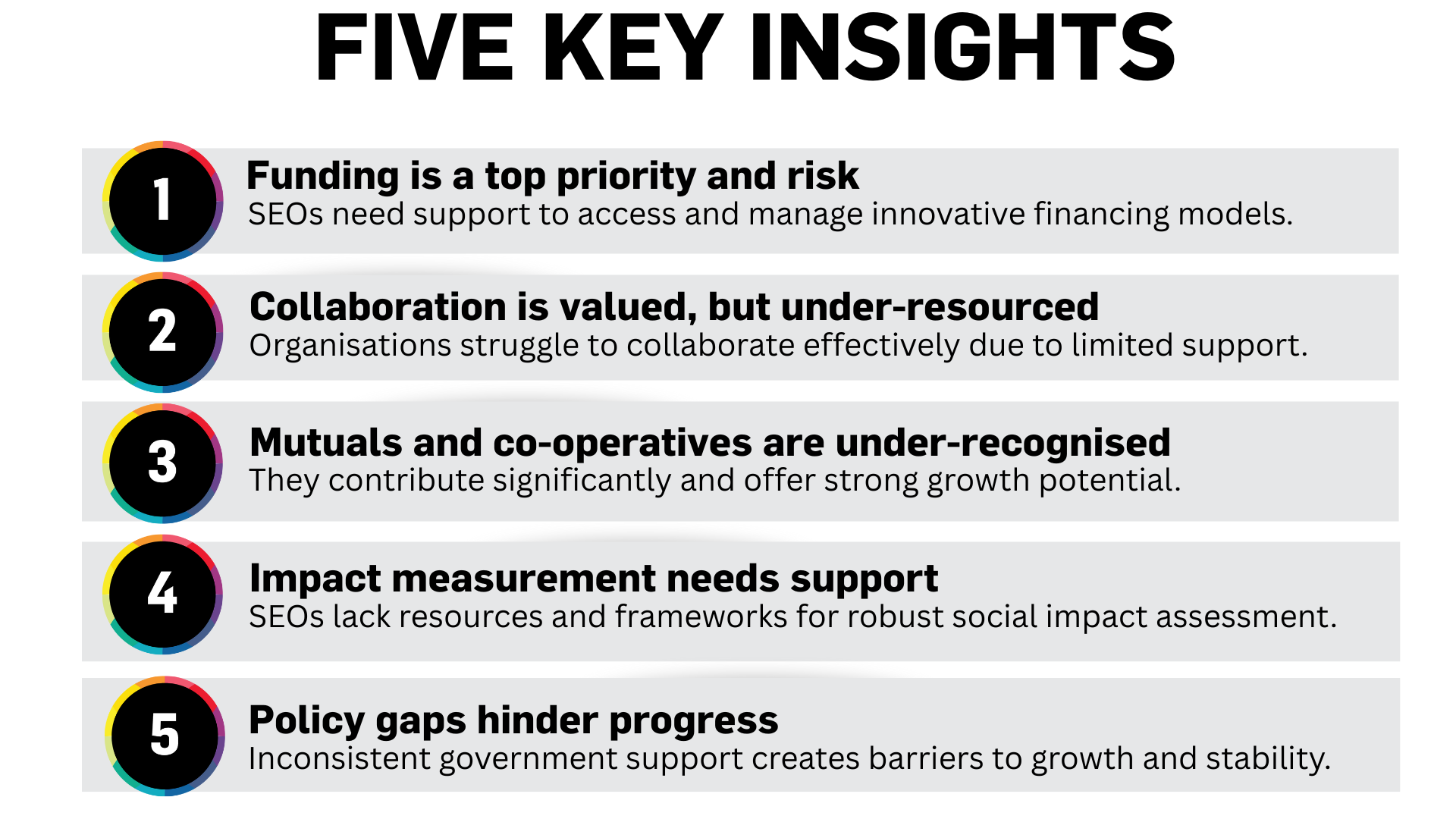
A/Professor Edwards thanked the organisations who had contributed to the first year of the research, with inputs welcome for the continuing study, especially on how to best value the sector's contribution and capability gaps.
The role of government and Australia's Social Economy
The Hon Dr Andrew Leigh , Assistant Minister for Productivity, Competition, Charities & Treasury, spoke to the policy approach that the Australian Government has put in place to collaborate with the social sector and stimulate the social economy. These include initiatives to streamline donations for charities and reduce red tape, introduce the category of community foundations, and implement a fixed schedule for a regular General Social Survey to track important data that is not reflected in standard economic statistics.
“The social economy can help to minimise the tears in the social fabric,” he said. “Just as the regular economy keeps us fed and clothed, so too the social economy ensures that our local sporting organisations are persisting, ensures that our environment is better looked after (and) it ensures that the most vulnerable in the community are taken care of.”
Minister Leigh said the Government understood the value of sustaining the social sector and was exploring how social enterprises could be strengthened.
The social economy - a want or a need?
Business Council of Co-Operatives and Mutuals CEO, Melina Morrison , described how the social economy had become a key driver, not a ‘nice to have’, with social economy organisations proving to be more resilient and able to respond to crisis than those operating purely for profit.
“Australia loses if we don’t have a broad spectrum of corporate forms in the real economy,” she said.
“The social economy exists to maximise benefits for stakeholders other than shareholders, and this allows the deployment of human and financial capital in ways that firms with a narrow stakeholder focus can't do.”
Ms Morrison told the panel that by balancing profits and community needs, the social economy was able to target problems that are beyond government and market services alone.
A pathway to collaboration across Australia's social economy
Australian Council of Social Services CEO Dr Cassandra Goldie AO echoed the points that the social economy is already a significant economic contributor to the nation.
“We can prove the GDP benefits that come from the social economy. We, employ 1 in 10 workers, we contribute over 200 billion, almost 8% of GDP. We're a bigger contributor to the economy than the combination of the mining sector, the agriculture sector, the fisheries sector, and where as big as retail,” she explained.
Equally importantly however, is the fact that social economy organisations reinvest repeatedly back into their communities, delivering better outcomes. These organisations have demonstrated that they want to operate in a more collaborative environment, and are often facing operational challenges to do that.
Dr Goldie highlighted the importance of CSI’s social economy research to the upcoming productivity roundtable.
“I'll be drawing on this research to help make the case for us fundamentally rethinking where we've been for the last two decades on delivering critical human services that are about improving the lives of people and communities and the planet.”
The role of B Corps in the social economy
B Lab is building on this environment of collective action with their global movement addressing some of society’s biggest challenges. Certified B Corps are for-profit businesses that operate to high standards of social and environmental performance, transparency and accountability.
CEO of B Lab Australia & New Zealand , Andrew Davies , told the panel that social economy organisations shone a light on how the business world was shifting, with the power to influence the practices and culture of the broader economy and usher in a new system altogether.
“Engaging with the social economy is a really important part of rewriting some of the cultural norms that dominate what we expect from business,” he said.
“We're not going to regulate our way to getting business to operate in a sustainable way for the long term. I do think we need new narratives of the role of business, and not to trap ourselves in a bifurcation of the for-profit or ‘antisocial economy’ and the social economy. And in this context, B Corps and other models like social enterprise are more than just a kind of fringe movement of values-led entrepreneurs who are just willingly doing things differently.
“I think they are a window into the future of what a different economic system can look like.”
Social enterprises and the Social Economy
Kylie Flament , CEO of Social Enterprises Council of NSW and ACT , explained that to be successful, social enterprises needed to be profitable, have positive societal impact, and operate ethically.
She described how the social economy represented a way for businesses to put people and planet first, correcting a dominant economic narrative of profit at all cost.
“We have an opportunity now to course correct,” she said. “Social enterprises are a really interesting and effective way to take the very best tools and processes of business, but apply them to do good.”
Providing the knowledge base
Centre for Social Impact CEO Arminé Nalbandian summarised the discussion as a fascinating exploration of how the social economy could transform quality of life in Australia. She emphasised that with richer data and clearer definitions, the sector can be more effectively supported to realise its significant promise.
“Today’s conversation has demonstrated to us that the social economy is not just a label, but could perhaps be a living framework for building a fairer, more sustainable Australia,” she said. “Let's take the insights, the energy and connections from this discussion back into our work, so that together we can advance an economy that better serves people, communities and the planet.”