Riding the Tech Wave: How Charities Can Positively Engage with the Innovation Generation


Australia’s next wave of major philanthropists isn’t coming from boardrooms or family foundations; they’re coming from the tech startup scene.
The Centre for Social Impact recently hosted the webinar, “Riding the Tech Wave: How Charities Can Positively Engage with the Innovation Generation,” exploring how not-for-profits can better connect with this emerging generation of donors.
The discussion drew on insights from the landmark Australian Tech Giving Report , developed by StartGiving and Centre for Social Impact UWA . The report highlights the $25 billion untapped giving potential of Australia’s top 30 tech-rich individuals. If unlocked, this philanthropic funding could radically reshape Australia’s social and environmental landscape.
Have a questions from the webinar? Check out the webinar FAQs
Insights from the Panel
Facilitated by Centre for Social Impact CEO, Arminé Nalbandian , the panel featured:
- Antonia Ruffell , CEO of StartGiving
- Anthony Woods , Tech Giver and Co-Founder of Grafana Labs
- A/Prof Leanne Lester , Research Manager, CSI UWA
Together, they explored how tech givers differ from traditional philanthropists and discussed how charities can adapt their engagement strategies to align with these values.
New Faces in Australian Philanthropy
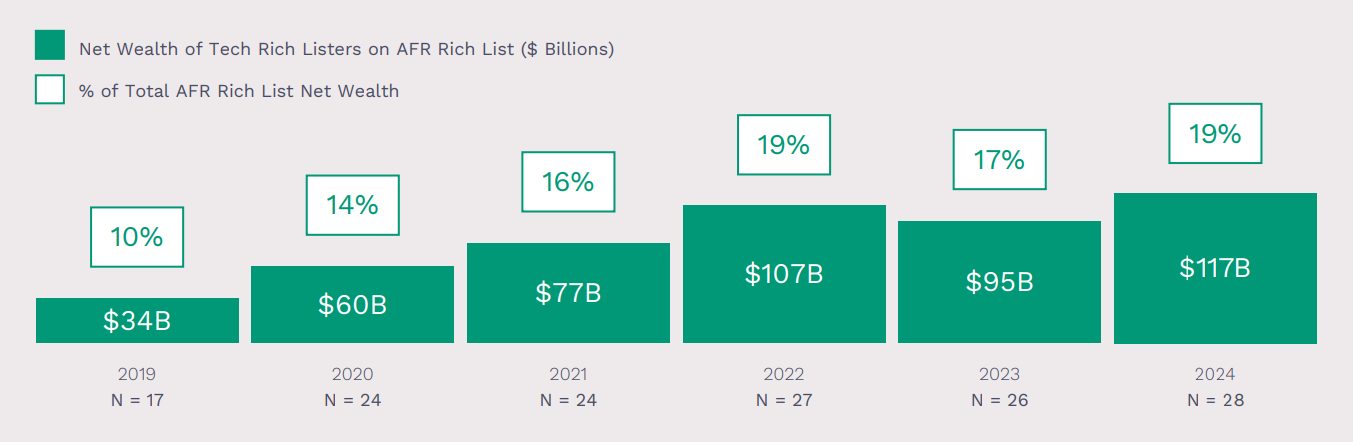
Australia is home to 20,000 tech startups, a number that continues to grow. In 2022, 21 reached “unicorn” status, valued at over US$1 billion. By 2024, 28 tech entrepreneurs featured on the Australian Financial Review Rich List, holding $116.7 billion - 19% of total wealth, nearly double 2019’s 10%. Among Australia’s Young Rich, 31 of the top 100 under-40s made their fortunes in tech, including eight of the top ten.
“The rise of tech founders is changing the face of philanthropy in Australia,” said Arminé Nalbandian, CEO of Centre for Social Impact.
“Tech entrepreneurs bring new experiences, perspectives, and a strong drive to create impact."
"For charities, this presents a unique moment: to engage a generation that values impact over recognition, action over tradition, and bold solutions over incremental change. The potential to unlock new funding is very real," explained Arminé.” Arminé explained.
CEO of StartGiving, Antonia Ruffell, highlighted the unique traits of a typical tech giver:
“When we look at a typical tech founder, they’re socially conscious, self-made, and problem solvers by nature. Many come into significant wealth early in life, which gives them the resources to act. But it’s not just about the money. They acknowledge the role that luck has played in their success and are driven by a desire have a positive impact," Antonia shared.
Antonia also explained how these traits influence their approach to philanthropy.
"They bring an optimistic, entrepreneurial spirit to their giving. They’re willing to learn as they go and collaborate, to take risks and to back inspirational social change leaders, new ideas and innovation.”
Australia’s Tech Givers on the Rise
Co-author of the report, Associate Professor Leanne Lester from the Centre for Social Impact UWA highlighted the dramatic increase in wealth and giving among tech founders.
“Over the past six years, the wealth of tech givers has surged dramatically from just 10% to 19% of total net wealth on Australia’s rich list. At the same time, tech founders’ contributions to major philanthropy have skyrocketed, rising from 1% to 21% of the total grants made by Australia’s Top 50 givers. It’s a remarkable shift that shows how this new wave of innovators is reshaping the landscape of giving," she explained.
Rethinking Engagement
The conversation also highlighted that the sector itself must evolve as this new donor class rises. Traditional approaches may no longer resonate in the same way, and charities are increasingly navigating a landscape where authentic relationships, demonstrable impact, and an innovative mindset shape engagement.
“If you want to see change, you have to take action. You can't just wait. The sooner we can take action, the sooner we can drive change, the better. Problems are much easier to fix the earlier you approach them.
I think it's important just to get started with giving when you can. When you've got the opportunity to be able to go and do it, why not?” said Anthony Woods, co-founder, Grafana Labs.
Looking Ahead
By 2030 the tech sector is predicted to contribute $250 billion annually to the Australian GDP. As it continues to grow, so too does its potential to drive social change. The report suggests that tech philanthropy will continue to increase in both scale and sophistication, potentially transforming not just how much is given, but how it's directed to create meaningful impact