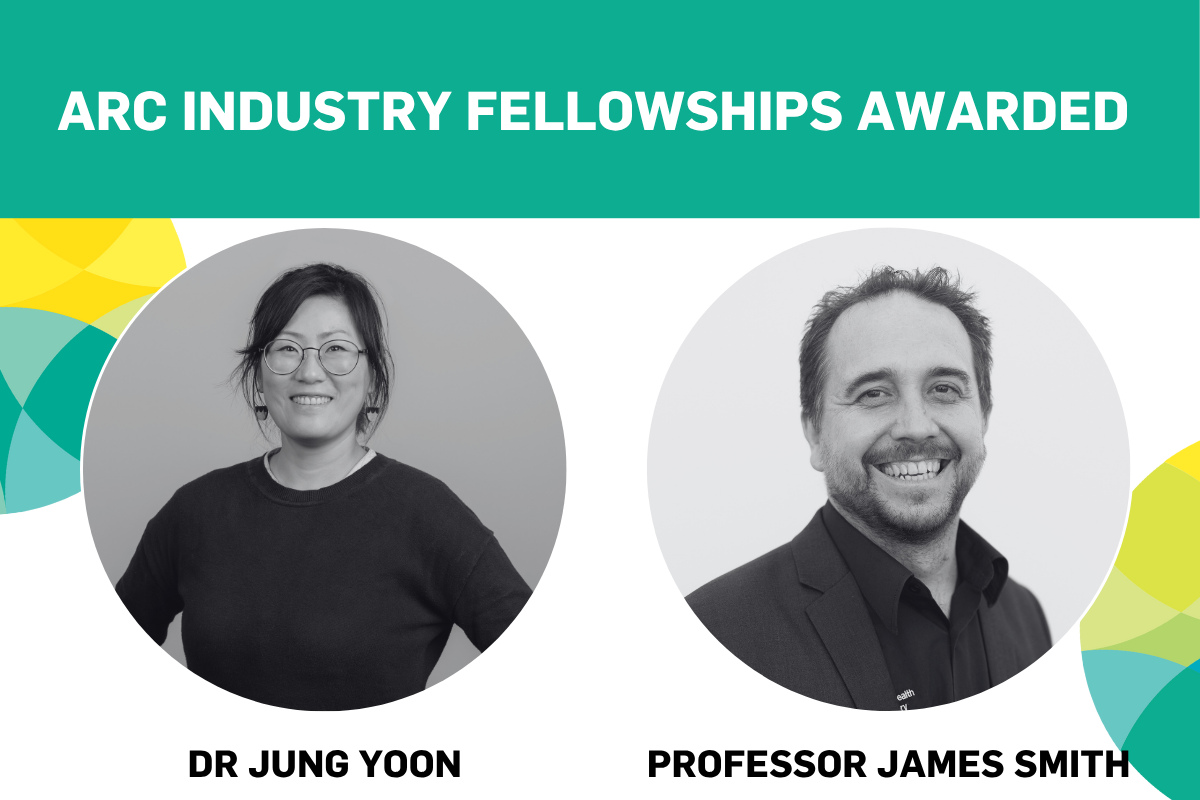
Two researchers at CSI Flinders awarded ARC Industry Fellowships


The recent announcement of ARC Industry Fellowships has seen two researchers from CSI Flinders awarded over $1.6m of ARC funding for their projects. The ARC Linkage funding schemes aim to encourage and extend cooperative approaches to research, and improve the use of research outcomes by strengthening links within the innovation system in Australia and internationally.
Professor James Smith has been awarded a Mid-Career Industry Fellowship for his project, Strategies for engaging vulnerable young men in health and social services.
His project summary notes that; Australian boys and young men are regarded as risk takers and reluctant to seek help; traits perceived to jeopardise their engagement with supportive health and social services. In addition, the professionals within these services are often poorly equipped to engage boys and young men when they do seek help. This Fellowship, collaborating with Movember, government, non-government, peak bodies and Aboriginal community-controlled organisations, will co-design novel evidence-based, equitable, age-appropriate, gender-transformative, and culturally-responsive strategies, tools and frameworks that enable vulnerable and marginalised adolescent boys and young men to access, and engage with, health and social services in Australia more effectively.
Dr Jung Yoon has been awarded an Early Career Industry Fellowship for her project, Invisible Ramp: A Job-Matching Navigation for Disability Employment.
This Fellowship aims to co-design a novel, accessible, and effective job-matching navigation model for individuals with cognitive disability; leveraging a strengths-based approach and conceptual pillars of access, inclusive practice, professionalisation, and socio-economic engagement. Design of the model and a proof-of-concept job-matching digital tool – to find the best suited jobs in diverse workplaces for candidates with cognitive disability – will draw on essential insights from key Australian stakeholders. Significant benefits for Australia are expected in diversity, equity, and inclusion; diagnostics for workplace accessibility improvements; time and cost efficiency; and supporting the employability of people with disability.