

Centre for Social Impact joins global leaders and UNSW Partners at Sustainable Development Congress in Bangkok

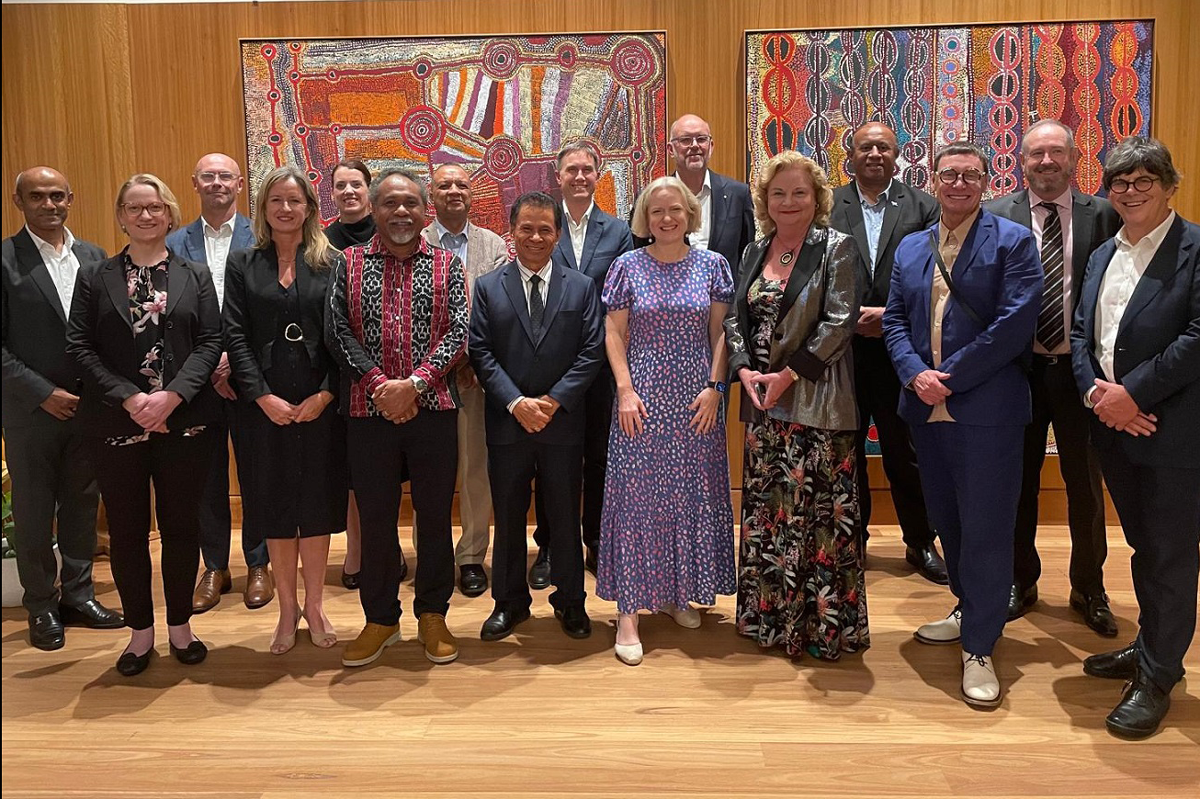
Associate Professor Mel Edwards, Research and Innovation Director at CSI UNSW, recently attended the Global Sustainable Development Congress in Bangkok.
Driven by the goal of uniting higher education, governments, businesses and civil society for a more sustainable future, the Congress is a call-to-action to ignite progress towards meeting the United Nations’ Sustainable Development Goals (SDGs).
Over four days, the event brought together 3,000 global thought leaders and innovators, emphasising our interconnectedness and the fragile ecosystems that sustain us. It provided a unique opportunity to engage deeply with global sustainability challenges and explore collaborative solutions.
Unlike typical conferences where the focus is on transferring knowledge and showcasing achievements, the Global Sustainable Development Congress combines panels with collaborative workshops to create powerful new alliances between sectors.
As an expert, leader, and passionate advocate for sustainability, innovation, and impact, Associate Professor Mel Edwards was invited to join three key discussions throughout the jam-packed program, including a workshop discussing future priorities, a roundtable on carbon, and the Green Skills Summit on transforming the labour market to reach net zero.
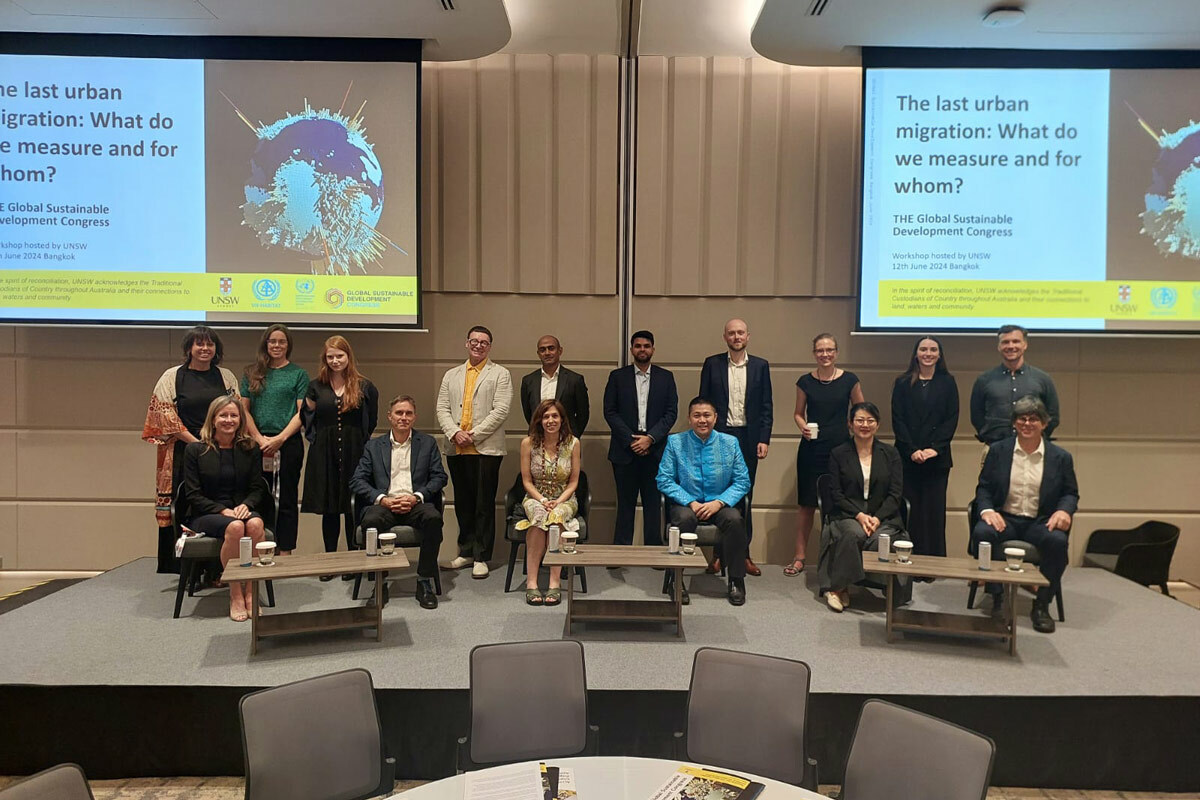
1. Workshop: The last urban migration and a post-SDG agenda for cities
What do we measure and for whom?
An interdisciplinary workshop hosted by UNSW, combined practitioners, scholars and those with lived experience from across the APAC region to draw out priorities for a post-SDG agenda for cities.
A/Prof Edwards was invited to talk on the topic of ‘Metrics that Matter’.
She explained that what matters in the world today is markedly different from the time and place when the SDG goals were established. “What matters has been changed by us and the worsening climate, biodiversity loss, intensified migrations, social dislocation and heightened political instability.
“Through our work at the Centre for Social Impact implementing social impact methods for over 15 years, we’ve come to understand that who designs the program, for whom, and their assumptions of change are influential in generating the outcomes,” she said.
“Often unseen and unheard is the lived experiences of people, their wisdom, cultures, traditions, stories of change, and their needs and everyday activities.”
“Metrics must be dynamic, account for complexity, alternate scenarios and feedback loops, and be guided by foresight in the now,” she concluded.
2. Roundtable: Water, energy, and food goals post 2030
Can carbon be the currency to a just world?
Co-hosted by UNSW and the UN Development Coordination Office – Asia Pacific, the roundtable brought together 30+ passionate UNSW leaders, their Pacific partners, and UN officials to discuss lessons and approaches that align both water, energy and food with carbon strategies in addressing global inequality.
“Discussions centred around the nexus of water, energy, food and the social and policy systems that will support prosperity,” explained Associate Professor Edwards.
“These conversations are critical to move us beyond the single focus on carbon and progress holistically towards the SDGs”.
The group delved into the pressing issues of anthropocentric climate change and the resultant forced migrations causing social dislocations, and just energy transitions, highlighting the urgency of these challenges.
“Our conversations also focused on identifying goals that can effectively support sustainable development and regeneration efforts,” she explains.
3. Green Skills Forum
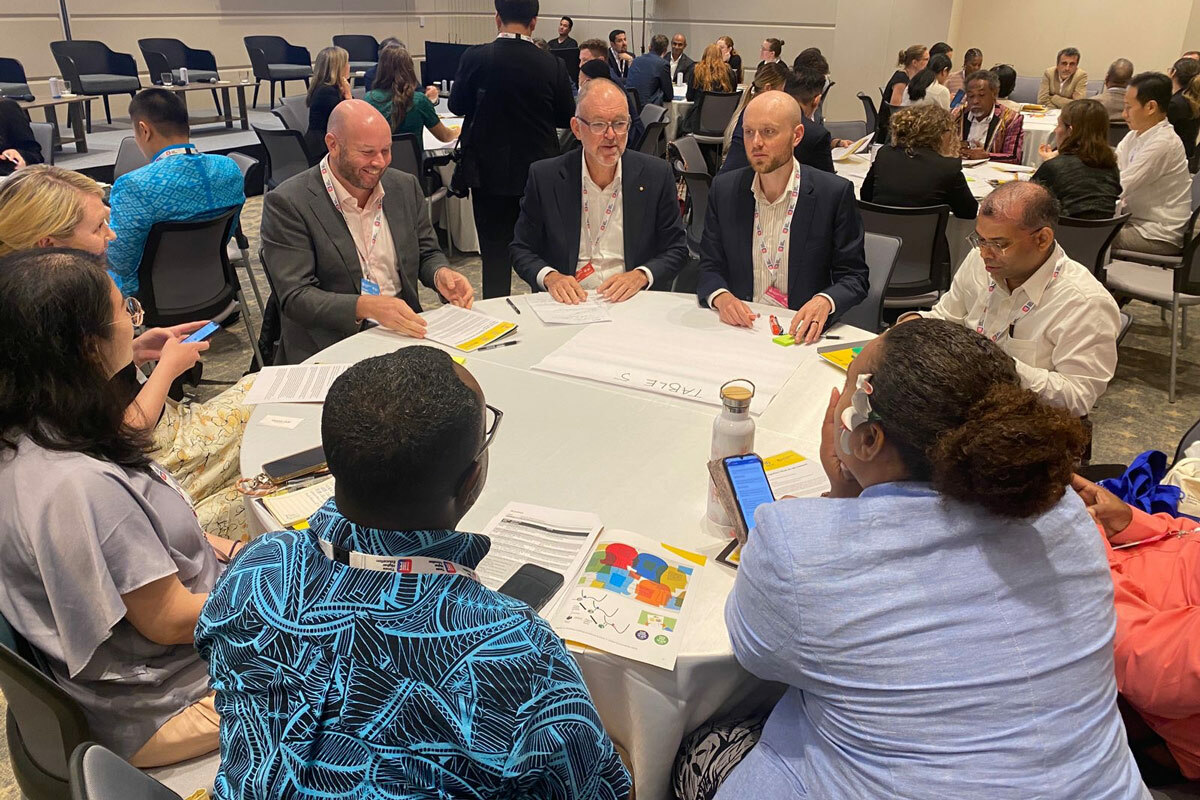
Finally, A/Prof Edwards had the chance to attend the Green Skills Summit to explore the role of business leaders, governments and education institutions in transforming the labour market to reach net zero.
Two education challenges emerged in the need to balance:
- New skills development of younger generations, with the demands for upskilling and reskilling the global workforce
- Skills for responding to a society and environment in transition with those skills for working in a changed economy and society
“Cross-sector partnerships between education institutions, businesses, and governments will be vital in closing the green skills gap,” explains Mel.
“These can involve student projects working on decarbonization challenges and collaborations with impact funding organizations seeking companies with clear climate transition plans, she says.
Bringing back new insights on critical skills that we are teaching in our social impact programs at the Centre for Social Impact, Associate Professor Edwards says we must recognise the transition to a green economy is an opportunity, not a burden, and to leave no one behind.